
AI Agents
Biologists need genetic evidence. Computational analysts spend months wrangling data. By the time results come back, the science has moved on. Inference Agents eliminate friction by delivering instant PhD-level answers using generative AI, letting biologists iterate rapidly and computational teams focus on science, not data processing. An "autonomous mode" runs complex workflows end to end, so your team delivers the output of a much larger one.
We've built multiple ways to access Inference Agents, because your workflow shouldn't adapt to our platform.
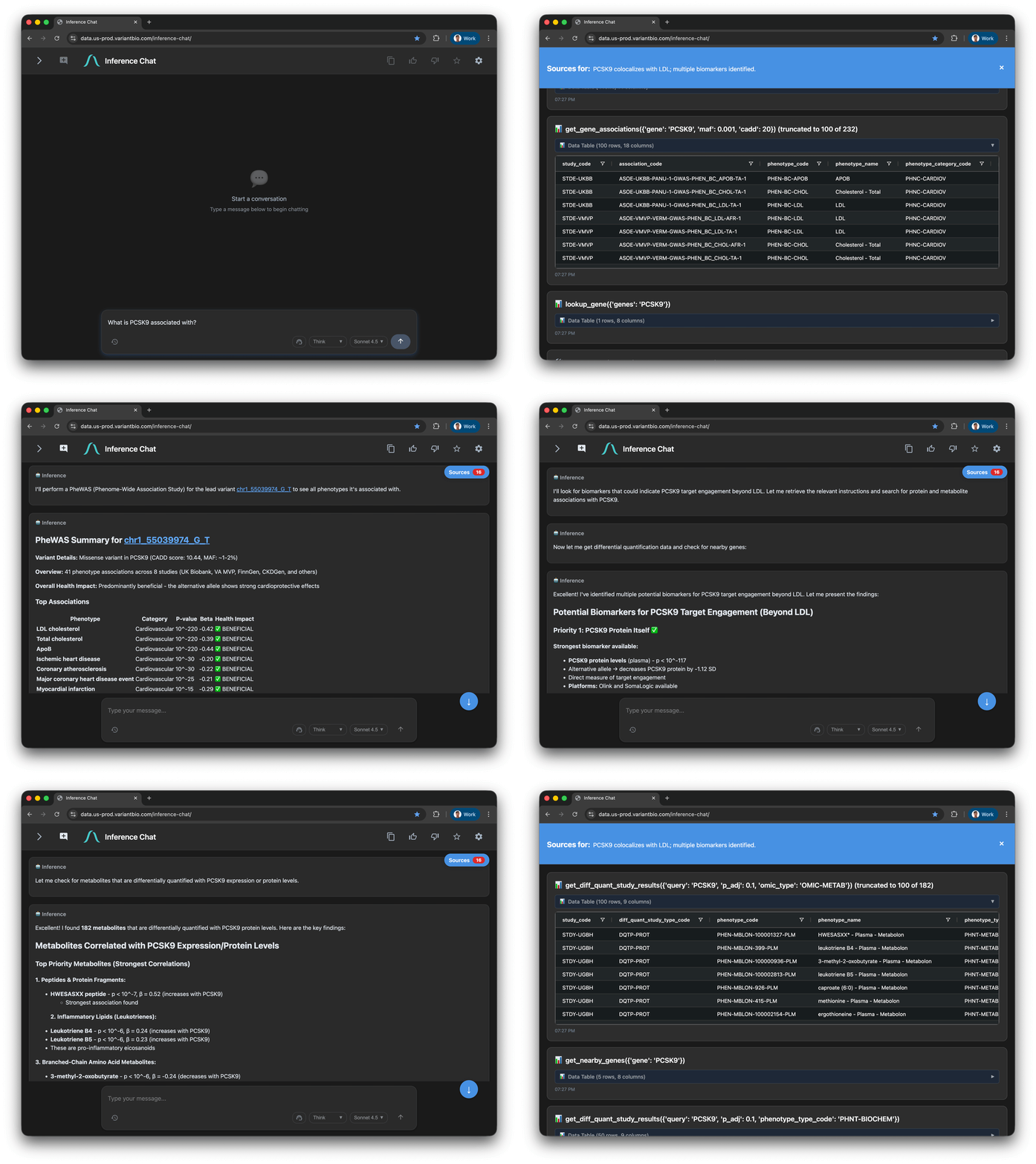
A purpose-built conversational UI for accessing agents with features designed for scientific rigor. See every API call the agent makes, via sources. Tables, figures, and outputs are exportable. Pick up where you left off with conversation history.
MCP means Inference works wherever you already work. Connect to Claude Desktop, ChatGPT, or any MCP-compatible client. Link to other MCP servers and knowledge bases for a fully integrated discovery experience.
End-to-end analyses Inference Agents run autonomously — from a disease or a gene all the way to a drug-aware therapeutic hypothesis and a full genetic-evidence dossier.
Start from a disease, phenotype, or GWAS and work end-to-end to an actionable target hypothesis. The agent identifies candidate genes, confirms the most likely causal gene, determines whether to agonize or antagonize, and checks for existing drugs that match the therapeutic direction.
Give the agent a single gene and it sweeps every therapeutic opportunity. It enumerates all indications from the gene's associations, triages each for whether the gene is causal, and builds a therapeutic hypothesis wherever the evidence is at least moderate — a full portfolio in one pass.
Produce a full genetic-evidence dossier for one gene against one disease. The agent assembles genetic evidence, variant-to-gene confidence, the therapeutic hypothesis, PHEWAS for safety and pleiotropy, disease-relevance expression data, and a druggability assessment into a single report.
This is where things get interesting.
Inference Agents can run fully autonomous and adaptable workflows, complex computational biology and genetics pipelines that execute without human intervention. Break up tasks, run parallel analyses, chain results together, and produce final reports.
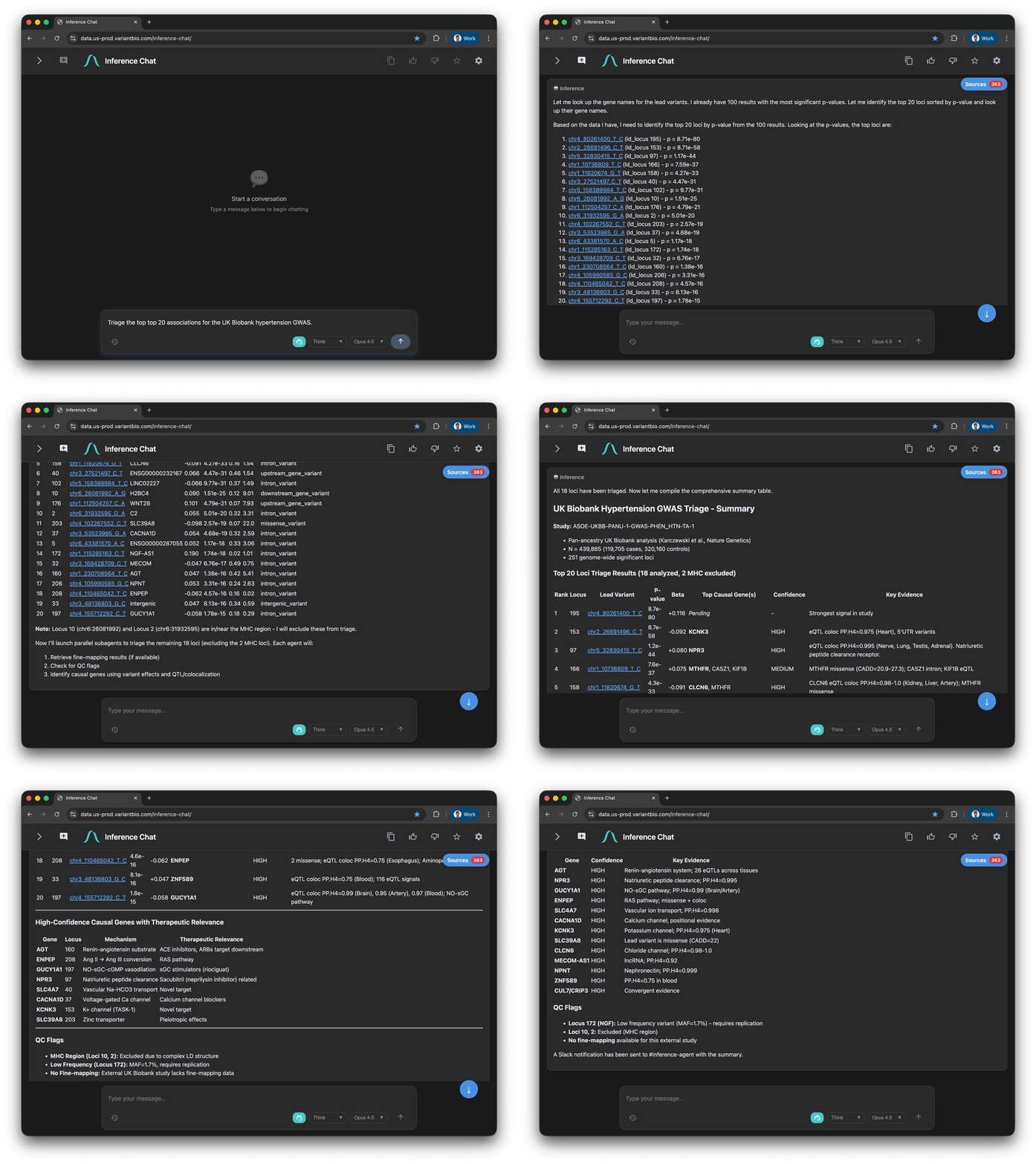
In this example, an agent was asked to triage the top associations from a UK Biobank hypertension GWAS. It executed over 300 API calls, retrieved GWAS results, searched for functional annotations, ran on-the-fly colocalization with QTL studies, and identified the most likely causal gene at each locus, all without any user intervention.
Enabling autonomous mode is as simple as clicking a button. It uses the most advanced models with extended reasoning to carry out complex multi-step workflows like this one.
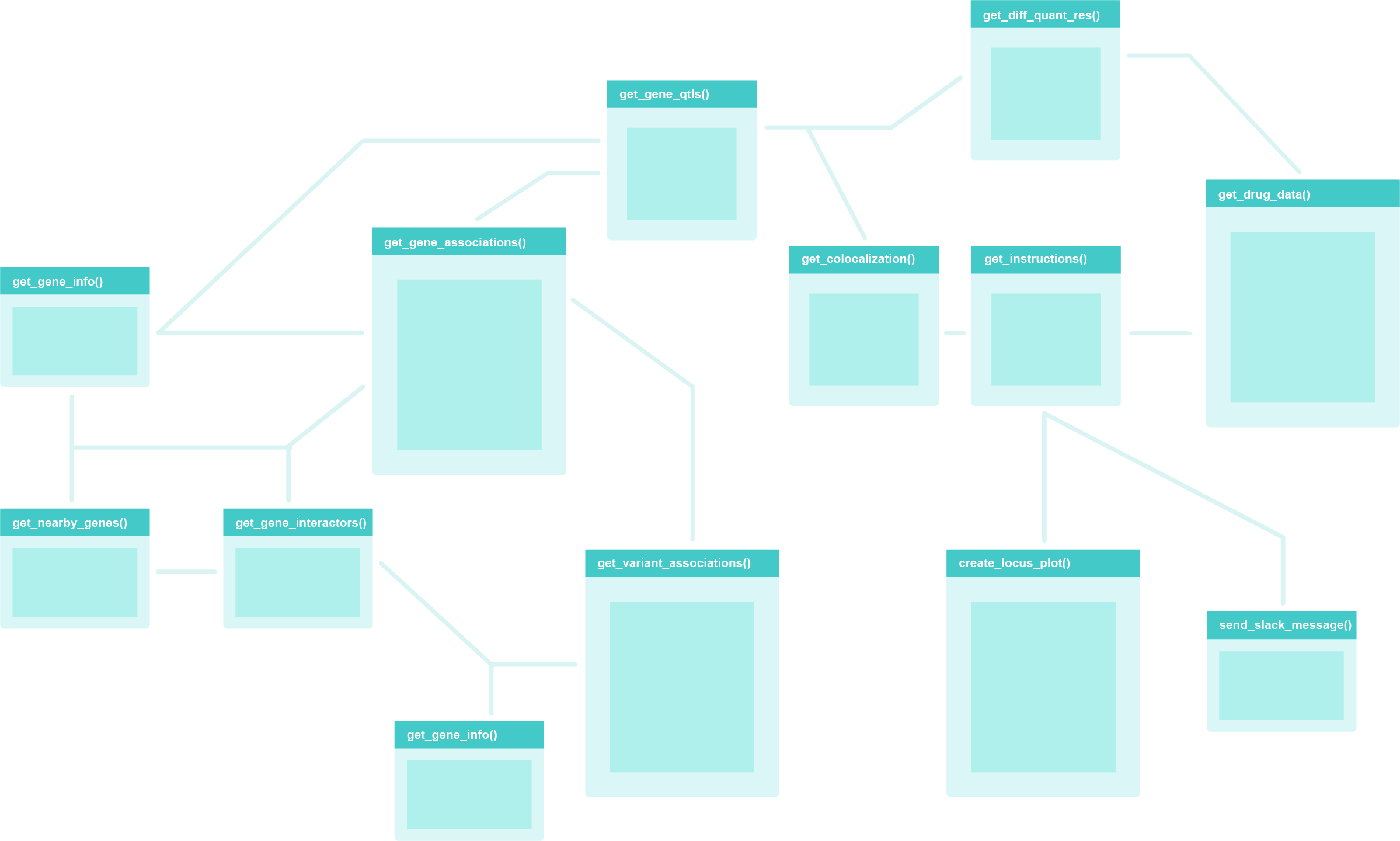
Inference Agents combine large language models with real-time access to the platform and specialized genomic drug discovery instructions. The LLM reasons, the platform provides data, and the instructions supply context, resulting in an autonomous system that plans and executes complex analyses that would take a computational biologist days.
Our computational biology team is small; agents give it the output of a much larger one. The same agents run our internal programs, our partnerships, and your work.
Analyses that took days now take minutes — experts focus on interpretation, and colleagues outside the field get answers directly. No queue, no handoff.
Agents are powered by cutting-edge AI tools that transform genomic drug discovery.
Explore AI Discovery →